
A customer service career path offers strong job stability, highly transferable skills, and clear opportunities for advancement across industries. From entry-level support roles to leadership and management positions, customer service professionals play a critical role in shaping customer experience and long-term brand loyalty.
This guide explores the customer service career path, including key roles, required skills, and practical steps to grow your career in customer service. If you’re exploring this field more broadly, you may also find the customer service career path overview helpful as a complementary resource.
Reviewed by senior career experts at Vocationic, led by Sarah Johnson, Senior Career Coach.
Overview of the Customer Service Career Path
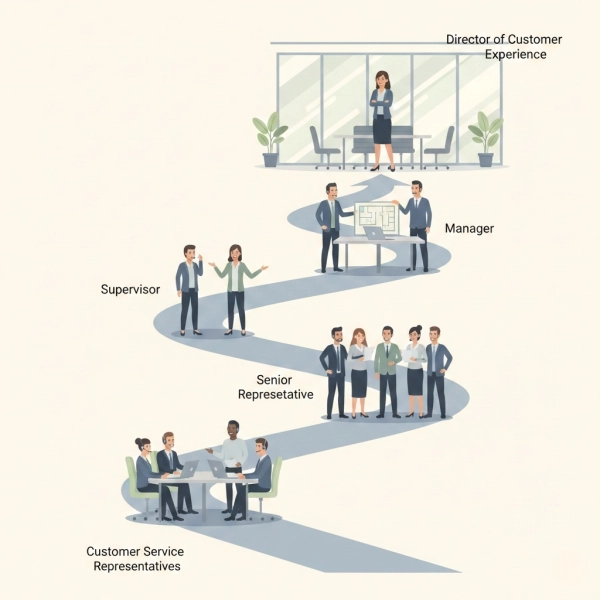
While job titles may differ by company and industry, most customer service careers follow a similar progression:
- Customer Service Representative (Entry-Level)
- Senior Customer Service Representative
- Customer Service Supervisor or Team Lead
- Customer Service Manager
- Director of Customer Experience or Operations
Some professionals also transition into related fields such as sales, account management, customer success or training.
Entry-Level Customer Service Roles
Entry-level customer service positions are the foundation of a long-term career in customer support, customer experience, and operations. These roles help professionals build communication skills, product knowledge, and confidence in handling customer interactions across multiple channels.
Customer Service Representative (CSR)

Role Overview
Customer Service Representatives (CSRs) are the primary point of contact between a company and its customers. They shape first impressions, resolve issues, and directly influence satisfaction and retention.
CSRs typically work in call centers, retail environments, or digital support channels such as phone, email, live chat, and social media. This role is ideal for individuals starting their careers or transitioning into customer-facing positions. Candidates preparing for this role often benefit from reviewing customer service resume examples to understand how employers evaluate relevant skills.
Key Responsibilities
Customer Service Representatives handle a wide range of daily tasks, including:
- Responding to customer inquiries via phone, email, chat, or in-person interactions
- Resolving complaints, billing issues, and service-related problems
- Processing orders, returns, refunds, or account updates
- Documenting customer interactions accurately in CRM systems
- Following scripts, policies, and escalation procedures
- Escalating complex or sensitive issues to senior support or supervisors
Success in this role depends on consistency, professionalism, and the ability to remain calm under pressure.
Skills to Develop
Entry-level CSRs should focus on building core customer service skills, such as:
- Clear verbal and written communication
- Active listening and empathy
- Basic problem-solving and conflict resolution
- Time management and multitasking in fast-paced environments
- Familiarity with customer service tools and CRM software
Many of these competencies overlap with broader soft skills employers look for, making customer service an excellent starting point for long-term career growth.
Typical Experience
0–2 years
Education & Training
Minimal formal education required
Most companies provide structured onboarding and on-the-job training
Mid-Level Customer Service Roles
As professionals gain experience, they often move into roles that involve more responsibility, problem-solving, and leadership.
Senior Customer Service Representative

Role Overview
Senior Customer Service Representatives handle complex customer cases and serve as role models for frontline teams. They often act as informal leaders, helping train new hires and ensuring service quality standards are met.
This role bridges the gap between entry-level support and management.
Key Responsibilities
- Resolving escalated or high-priority customer issues
- Supporting and mentoring junior CSRs
- Identifying recurring customer problems and service trends
- Assisting with training, onboarding, and quality assurance
- Maintaining high customer satisfaction and compliance standards
Skills to Build
- Advanced conflict resolution and de-escalation
- Deep product or service knowledge
- Coaching and peer support skills
- Analytical thinking and basic reporting.
Developing strong problem-solving skills at this stage is especially important for further advancement.
Typical Experience
2–4 years
Customer Service Supervisor / Team Lead

Role Overview
Supervisors and team leads oversee daily customer service operations and manage frontline teams. This role combines people leadership with performance management and operational execution.
It is often the first formal management position in the customer service career path.
Key Responsibilities
- Managing schedules, workloads, and staffing needs
- Coaching, mentoring, and evaluating team performance
- Monitoring KPIs such as response time, resolution rate, and CSAT
- Handling escalated customer issues
- Supporting training, onboarding, and process improvements
Skills to Develop
- Leadership and team management
- Performance evaluation and constructive feedback
- Operational planning and prioritization
- Decision-making under pressure.
Strong teamwork skills and the ability to give effective feedback are essential at this level.
Typical Experience
3–5 years
Senior-Level Customer Service Roles
Senior roles focus on strategy, scalability, and alignment between customer service and business goals.
Customer Service Manager
Role Overview
Customer Service Managers are responsible for the overall effectiveness of customer support operations. They focus on optimizing processes, improving customer experience, and leading teams at scale.
Key Responsibilities
- Developing customer service policies, procedures, and standards
- Managing budgets, staffing, and resource allocation
- Analyzing customer feedback and service metrics
- Collaborating with product, sales, and operations teams
- Implementing tools and technologies to improve service efficiency
Skills Required
- Strategic planning and operations management
- Data-driven decision-making
- Cross-functional collaboration
- Strong leadership and communication.
Professionals moving into management often benefit from strengthening leadership skills for non-managers earlier in their careers.
Typical Experience
5+ years
Director of Customer Experience / Customer Operations

Role Overview
At the executive level, customer service professionals shape company-wide customer experience strategy. These roles focus on long-term vision, customer retention, and scalable service models.
Key Responsibilities
- Defining customer experience vision and strategy
- Overseeing multiple teams, regions, or channels
- Aligning customer service with brand and business goals
- Driving innovation, automation, and continuous improvement
- Reporting performance and insights to executive leadership
Skills to Develop
- Executive leadership and influence
- Business and financial acumen
- Change management
- Advanced analytics and customer insights
Alternative Career Paths from Customer Service
Customer service skills are highly transferable. Many professionals transition into roles such as:
- Customer Success Management
- Sales or Account Management
- Operations or Workforce Management
- Quality Assurance or Training
- Human Resources or People Operations
For those considering a broader transition, resources on transferable skills for career changers can help identify how customer service experience applies across industries.
Skills Needed for Long-Term Success in Customer Service
To build a sustainable customer service career, professionals should develop:
- Strong communication and interpersonal skills
- Emotional intelligence and empathy
- Problem-solving and adaptability
- Time management and organization
- Digital literacy and CRM proficiency
As careers progress, strategic thinking and business understanding become increasingly important. Improving emotional intelligence in the workplace can significantly enhance leadership effectiveness.
Certifications and Training for Customer Service Careers
While not required, certifications can support career advancement.
Popular options include:
- Customer Service Professional (CSP) certifications
- Call center or contact center management certifications
- CRM platform training (Salesforce, Zendesk, HubSpot)
- Leadership and people management courses
Certifications are most valuable when combined with practical experience.
How to Advance in the Customer Service Career Path
To progress in customer service:
- Consistently deliver high-quality customer experiences
- Seek feedback, coaching, and mentorship
- Build deep product and process expertise
- Volunteer for leadership, training, or improvement initiatives
- Track and demonstrate measurable performance improvements
Career growth in customer service is driven by results, reliability, and demonstrated leadership potential—not just tenure.
Is a Customer Service Career Right for You?
A customer service career path is ideal for individuals who enjoy helping others, solving problems, and working in fast-paced environments. With strong growth opportunities and transferable skills, customer service can be both a rewarding long-term career and a stepping stone to broader leadership roles.
With the right mindset and continuous skill development, customer service professionals can build meaningful and successful careers across industries.



Comments (0)