
The nursing profession offers one of the most stable, flexible, and rewarding career paths in healthcare. Understanding the nursing career path can help you choose the right education, specialization, and advancement strategy—whether you’re just starting or looking to grow into leadership or advanced practice roles.
For nurses preparing to enter the workforce or move into a new role, reviewing real-world nursing resume examples can provide clarity on how experience, certifications and clinical skills are typically presented at different career stages.
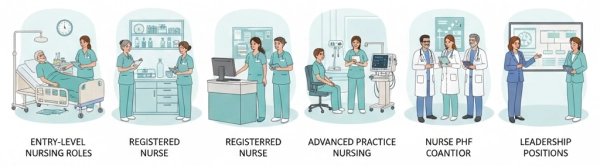
This guide breaks down the major nursing roles, career levels, and steps to advance in nursing.
Reviewed by senior career experts at Vocationic, led by Sarah Johnson, Senior Career Coach.
Overview of the Nursing Career Path
The nursing career path is structured but flexible, allowing nurses to advance clinically, specialize, or move into leadership, education or research.
A typical nursing career progression includes:
- Certified Nursing Assistant (CNA)
- Licensed Practical Nurse (LPN) or Licensed Vocational Nurse (LVN)
- Registered Nurse (RN)
- Specialty Registered Nurse
- Advanced Practice Registered Nurse (APRN)
- Nurse Leader, Educator, or Administrator
Not every nurse follows the same path. Career choices depend on education, certification, experience, and personal goals.
Entry-Level Nursing Roles
Entry-level nursing positions provide the foundation for a long-term nursing career. These roles focus on developing core clinical skills, patient interaction, and an understanding of healthcare environments.
Certified Nursing Assistant (CNA)
Role Overview
Certified Nursing Assistants support patients with basic daily care while working under the supervision of licensed nurses. This role is often the first step for individuals entering the nursing profession.
Key Responsibilities
CNAs are responsible for hands-on patient support, including:
- Assisting patients with bathing, dressing, eating, and mobility
- Measuring and recording vital signs such as blood pressure and temperature
- Maintaining patient comfort, hygiene, and safety
- Observing patients and reporting changes in physical or emotional condition to nursing staff
Education & Training
CNA roles typically require completion of a short-term state-approved training program, followed by a certification exam. Programs usually take a few weeks to a few months to complete, making this an accessible entry point into healthcare.

Licensed Practical Nurse (LPN/LVN)
Role Overview
Licensed Practical Nurses (LPNs), also known as Licensed Vocational Nurses (LVNs) in some states, provide direct patient care under the supervision of Registered Nurses and physicians. Their scope of practice is broader than that of CNAs.
Key Responsibilities
LPNs/LVNs commonly perform tasks such as:
- Administering basic medications and injections
- Monitoring patient health and vital signs
- Assisting with medical procedures and treatments
- Maintaining accurate patient records and documentation
- Communicating patient status to RNs and healthcare providers
Education & Training
This role requires completion of a one-year practical nursing program and passing the NCLEX-PN licensing exam. Many LPNs later pursue RN education to expand their career opportunities.

Registered Nurse (RN)
Role Overview
Registered Nurses are central to patient care and play a critical role in nearly every healthcare setting, including hospitals, clinics, schools, and community health organizations. RNs have greater responsibility, autonomy, and career flexibility than entry-level nursing roles.
Key Responsibilities
RNs are responsible for both clinical and coordination aspects of patient care, including:
- Assessing and monitoring patient conditions
- Developing, implementing, and evaluating care plans
- Administering medications and advanced treatments
- Educating patients and families about health conditions and care plans
- Collaborating with physicians, specialists, and interdisciplinary teams
Education & Licensure
To become an RN, candidates must complete either:
- An Associate Degree in Nursing (ADN)
- A Bachelor of Science in Nursing (BSN)
All RNs must pass the NCLEX-RN exam. While ADN programs offer a faster path, many employers prefer or require a BSN for leadership roles, specialty positions and long-term advancement.
When preparing to apply for RN positions, understanding how to write a resume that highlights clinical rotations, certifications, and measurable outcomes can significantly improve job prospects.
Specialty Nursing Career Paths
After becoming an RN, many nurses choose to specialize in a specific clinical area. Specialization allows nurses to deepen expertise, increase responsibility, and often earn higher salaries.
Common Nursing Specialties Include:
- Critical care or Intensive Care Unit (ICU) nursing
- Emergency Room (ER) nursing
- Pediatric nursing
- Oncology nursing
- Operating Room (OR) or perioperative nursing
- Psychiatric and mental health nursing
Specialty roles typically require additional clinical experience, continuing education and professional certifications.

Advanced Practice Registered Nurse (APRN)
Role Overview
Advanced Practice Registered Nurses have advanced clinical training and operate with a high level of independence. APRNs often take on responsibilities traditionally associated with physicians.
APRN Roles Include:
- Nurse Practitioner (NP) – Provides primary or specialized care and often serves as a patient’s main healthcare provider
- Clinical Nurse Specialist (CNS) – Focuses on improving patient outcomes and clinical practice
- Certified Nurse Midwife (CNM) – Provides prenatal, childbirth, and women’s health care
- Certified Registered Nurse Anesthetist (CRNA) – Administers anesthesia and manages pain
Education & Certification
APRN roles require:
- A Master’s (MSN) or Doctoral (DNP) degree in nursing
- Advanced state licensure and national certification
Many APRNs can diagnose conditions, prescribe medications, and manage patient care independently, depending on state regulations.
Nursing Leadership, Education, and Administrative Roles
With experience, some nurses move away from bedside care into leadership, education, or administrative positions. These roles influence healthcare systems at a broader level.
Career Options Include:
- Nurse Manager or Nurse Leader
- Nurse Educator or Nursing Instructor
- Nurse Administrator or Director of Nursing
- Nurse Researcher
These roles focus on leadership, education, policy development, quality improvement, and organizational strategy.
Strong leadership roles often require well-developed resume skills such as communication, strategic thinking, and people management.
How to Advance in Your Nursing Career
Advancing along the nursing career path requires intentional professional development. Key steps include:
- Pursuing higher education such as a BSN, MSN, or DNP
- Earning specialty certifications relevant to your field
- Gaining experience in diverse clinical settings
- Developing leadership, mentoring, and communication skills
- Staying current with healthcare regulations, technology, and best practices
Career growth in nursing is often a combination of education, experience, and demonstrated leadership.
Skills Needed for a Successful Nursing Career
Long-term success in nursing depends on both technical and interpersonal skills, including:
- Strong clinical knowledge and critical thinking
- Effective communication and teamwork
- Emotional intelligence, empathy, and resilience
- Time management and adaptability in fast-paced environments
- A commitment to lifelong learning and professional growth
These competencies align closely with great skills to have on a resume across healthcare roles.

Key Takeaway
The nursing career path offers flexibility, job security and numerous advancement opportunities. Whether you pursue bedside care, advanced practice, or leadership roles, understanding your options helps you build a rewarding and sustainable career in nursing.





Comments (0)