
Changing careers at 30, 40, or even 50 is more common—and more achievable—than ever. Longer working lives, evolving industries, and the rise of remote work have made career reinvention possible at nearly any stage. Whether you’re feeling stuck, burned out or ready for a new challenge, a well-planned career change can lead to greater fulfillment, stability, and growth.

This guide explains how to change careers at different life stages, what challenges to expect, and practical steps to transition successfully.
Reviewed by senior career experts at Vocationic, led by Sarah Johnson, Senior Career Coach.
Is It Too Late to Change Careers?
The short answer is no. Many professionals successfully change careers later in life. Employers increasingly value transferable skills, maturity, and real-world experience—especially when candidates clearly articulate how their background applies to a new role. If you’re worried about how to position your transition, learning how to explain a career change in an interview can make a significant difference.
What matters most is:
- Choosing a realistic career path
- Leveraging existing skills
- Planning financially and strategically
- Being intentional about learning and networking
How Career Changes Differ by Age
Changing careers looks different depending on your life stage, financial situation, and professional experience. While the core steps are similar at any age, the mindset, risks, and strategies vary significantly in your 30s, 40s, and 50s.
Understanding these differences helps you make smarter, more realistic career transition decisions.
Changing Careers at 30

Your 30s are often a time of reflection and recalibration. Many professionals reach this stage after gaining several years of experience and realizing that their current career path no longer aligns with their interests, values, or long-term goals.
You may feel successful on paper but unfulfilled in practice—or you may see limited growth ahead and want to pivot early enough to build momentum in a new field. If this sounds familiar, guidance on how to change careers at 30 can help you evaluate your options more clearly.
Advantages at 30
- You still have significant time to build long-term career growth
- Many people have fewer financial obligations than later in life
- Employers are generally open to candidates making early-career pivots
- You have enough experience to offer value, but enough flexibility to learn
Common Challenges
- Fear of “starting over” or losing progress
- Pressure from peers or family to stay in a stable role
- Balancing career change with relationships, parenting, or personal goals
- Uncertainty about which direction to pursue
Best Strategies at 30
- Pivot into adjacent or related fields using transferable skills
- Use certifications, online courses, or bootcamps instead of full degrees
- Seek internal transfers or lateral moves within your current company
- Experiment through side projects, freelancing, or contract work
Your 30s are often the best decade to take calculated career risks, as the potential upside outweighs the downside.
Changing Careers at 40

Career changes at 40 are commonly driven by burnout, lack of advancement, job instability, or a desire for more meaningful or flexible work. At this stage, professionals bring depth, leadership, and perspective—but often face higher personal and financial stakes.
This is less about “reinventing yourself” and more about redirecting your experience.
Advantages at 40
- Strong professional judgment and soft skills
- Clear understanding of your strengths, weaknesses, and preferences
- Established professional reputation and network
- Ability to lead, mentor, and manage complex situations
Common Challenges
- Financial responsibilities such as mortgages, children, or dependents
- Fear of age bias in fast-changing or tech-driven industries
- Hesitation to accept a temporary title or pay adjustment
- Limited time to “start from zero”
Best Strategies at 40
- Choose careers that value experience, leadership, and domain knowledge
- Transition gradually through consulting, freelancing, or part-time roles
- Target positions where your industry expertise is transferable
- Focus on outcomes, results, and leadership impact rather than job titles
Many professionals at this stage benefit from reviewing transferable skills for career changers to better align their experience with new opportunities.
Changing Careers at 50

At 50, career change is often about sustainability, purpose, and quality of life rather than rapid advancement. Many professionals seek roles that are more flexible, less physically demanding, or more aligned with personal values.
While the risks may feel higher, the clarity and confidence gained over decades of work can be a major advantage.
Advantages at 50
- Extensive experience and professional credibility
- Strong communication, judgment, and decision-making skills
- Emotional resilience and calm under pressure
- Clear priorities and reduced tolerance for poor-fit roles
Common Challenges
- Limited time to recover financially from major missteps
- Concerns about keeping up with technology or new tools
- Perceived age discrimination during hiring
- Self-doubt about learning something new
Best Strategies at 50
- Target roles that reward expertise, mentoring, and advisory skills
- Emphasize results, leadership, and business impact—not years worked
- Upskill selectively, especially in digital tools or industry software
- Consider consulting, teaching, coaching, or part-time leadership roles
At this stage, positioning yourself as a problem-solver and expert is more effective than competing on speed or novelty.
Step-by-Step Guide to Changing Careers at Any Age
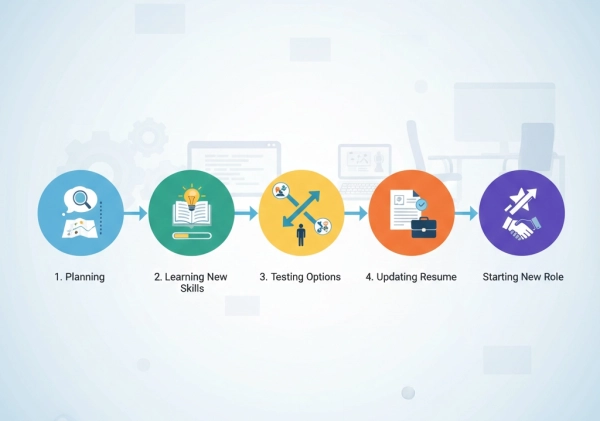
Regardless of whether you’re 30, 40, or 50, a successful career change follows a structured process.
Step 1: Clarify Why You Want a Career Change
Before making any move, identify your core motivation:
- Burnout or chronic stress
- Lack of growth, income, or stability
- Desire for purpose, flexibility, or better work-life balance
If burnout is a key factor, resources on how to deal with burnout while job searching can help you reset before making decisions.
Step 2: Identify Transferable Skills
Most career changers already have valuable, marketable skills, such as:
- Communication and collaboration
- Project management and planning
- Problem-solving and analytical thinking
- Leadership, coaching, or decision-making
Mapping these skills to your target role reduces the need to start from scratch.
Step 3: Research Realistic Career Options
Focus on careers that:
- Align with your strengths and interests
- Have stable or growing demand
- Offer entry paths for career switchers
Popular options for career changers include project management, data analysis, digital marketing, customer success, healthcare, education, and consulting. Exploring structured guides like the project manager career path or the data analyst career guide can help you assess long-term fit.
Step 4: Close Skill Gaps Strategically
You rarely need another full degree. Instead, prioritize:
- Online courses and professional certifications
- Bootcamps or part-time programs
- Hands-on projects, case studies, or portfolios
Focus on skills employers actually list in job descriptions.
Step 5: Test Before You Commit
Reduce risk by validating your interest and fit:
- Freelancing or consulting
- Volunteering or nonprofit work
- Informational interviews or job shadowing
- Contract or temporary roles
Testing prevents costly mistakes and builds confidence.
Step 6: Update Your Resume and Personal Brand
For career changers, positioning matters.
- Highlight transferable skills and measurable achievements
- De-emphasize unrelated experience
- Tailor your resume for each role
- Update LinkedIn to clearly explain your transition story
Your goal is to make your career change feel logical, not risky, to employers.
Step 7: Network Intentionally
Networking is especially critical for career changers.
- Reconnect with former colleagues and managers
- Join industry groups or online communities
- Request informational interviews, not job referrals
Many successful career transitions happen through conversations—not job boards.
Common Mistakes to Avoid When Changing Careers
- Starting over without a clear plan
- Ignoring financial preparation or savings
- Underestimating the value of your existing experience
- Trying to hide your age instead of reframing it as an asset
- Waiting indefinitely for “perfect timing”
Progress comes from action, not perfection.
How Long Does a Career Change Take?
Most successful career transitions take 6 to 24 months, depending on:
- Skill gaps
- Industry requirements
- Financial flexibility
- Consistency and effort
Career change is a process, not a single decision. Patience, planning, and persistence make the difference.
Final Thoughts: Reinventing Your Career Is Possible at Any Age
Changing careers at 30, 40, or 50 is not a failure—it’s a strategic decision to align your work with your goals, values, and lifestyle. With the right mindset, preparation, and support, career reinvention can be one of the most rewarding decisions you make.
Your experience is not a disadvantage. It’s your strongest asset—when you know how to use it.




Comments (0)