
Assertive communication is one of the most essential interpersonal skills for building confidence, improving relationships, and expressing yourself clearly without being rude or passive. It plays a critical role in effective communication and teamwork, especially in professional environments. Whether at work, in relationships, or in everyday conversations, learning how to communicate assertively helps you set boundaries, reduce conflict, and achieve better outcomes.

In this guide, you’ll learn the assertive communication meaning, core assertive communication skills, and how it compares to aggressive, passive, and assertive communication styles.
Reviewed by senior career experts at Vocationic, led by Sarah Johnson, Senior Career Coach.
What Is Assertive Communication?

Assertive communication refers to expressing your thoughts, needs, opinions, and boundaries in a clear, respectful, and confident manner. It balances honesty with empathy—allowing you to stand up for yourself while still valuing the viewpoints of others.
In short, assertiveness is communicating in a way that is:
- Direct but respectful
- Honest but considerate
- Confident but not controlling
Assertive behavior helps you speak your truth without violating someone else’s boundaries and is closely connected to emotional intelligence in the workplace.
Why Assertive Communication Matters
Developing assertiveness positively impacts nearly every area of life. People who communicate assertively tend to:
- Build healthier personal and professional relationships
- Reduce misunderstandings and prevent resentment
- Resolve conflicts more effectively
- Establish boundaries without guilt
- Become better leaders and team members
- Boost their confidence and self-esteem
Because assertiveness improves clarity and mutual respect, it is considered one of the soft skills every employer looks for in modern workplaces.
The Three Main Communication Styles: Aggressive, Passive, and Assertive
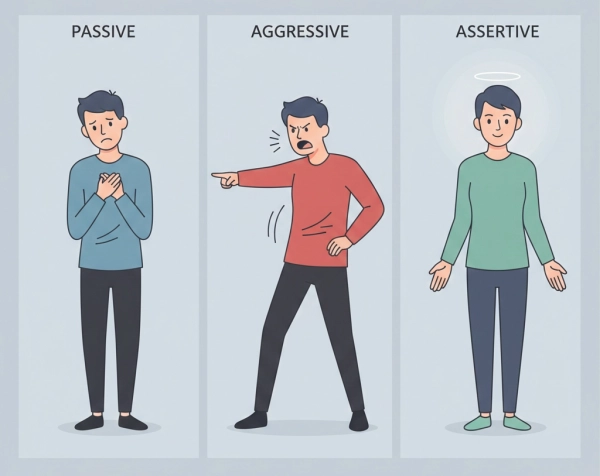
Understanding the difference between aggressive, passive, and assertive communication is essential for improving your interpersonal interactions. Each style reflects a different way of expressing thoughts, emotions, and needs—and each leads to very different outcomes in relationships, both personal and professional. By recognizing these styles, you can identify which patterns you fall into and learn how to shift toward healthier, more effective communication.
1. Passive Communication
Passive communication occurs when individuals have difficulty expressing their feelings, needs, or opinions openly. Instead of asserting themselves, they often stay silent or agree reluctantly to avoid tension. While this style might seem peaceful on the surface, it usually leads to internal conflict.
Characteristics of Passive Communication:
- Avoiding eye contact or looking down
- Speaking softly, hesitantly, or with apologetic language
- Struggling to say “no” even when overwhelmed
- Allowing others to make decisions for them
- Minimizing or suppressing their own needs
- Feeling nervous or fearful during disagreements
Common Outcome:
Over time, passive communicators often experience resentment, emotional fatigue, stress, and the sense that their voice doesn’t matter. Ironically, their desire to avoid conflict can lead to even more tension.
2. Aggressive Communication
Aggressive communication is the opposite extreme. This style involves expressing needs and opinions in a dominating, forceful, or hostile way. Aggressive communicators often prioritize their own viewpoint at the expense of others’ feelings or rights, which can create fear or resistance.
Characteristics of Aggressive Communication:
- Speaking in a loud, harsh, or demanding tone
- Interrupting others or talking over them
- Using blaming, sarcastic, or threatening language
- Pointing fingers or using rigid, intimidating body language
- Making demands instead of requests
- Prioritizing control over understanding
Common Outcome:
Although aggressive communication may produce short-term results, it damages trust and increases conflict—often leading to toxic dynamics that require conflict resolution skills to repair.
3. Assertive Communication
Assertive communication represents the balanced, healthy middle ground. Assertive communicators express their needs and opinions honestly while remaining respectful, calm, and considerate of others. It is the most effective communication style because it combines confidence with compassion.
Characteristics of Assertive Communication:
- Using a clear, steady, and respectful tone
- Stating feelings and needs honestly without accusing others
- Maintaining upright posture and balanced eye contact
- Expressing confidence without aggression
- Listening actively and seeking win–win solutions
- Willingness to compromise when appropriate
Common Outcome:
Assertive communication leads to mutual respect, healthier boundaries, more effective collaboration, and stronger relationships. It encourages open dialogue and minimizes conflict.
Key Assertive Communication Skills
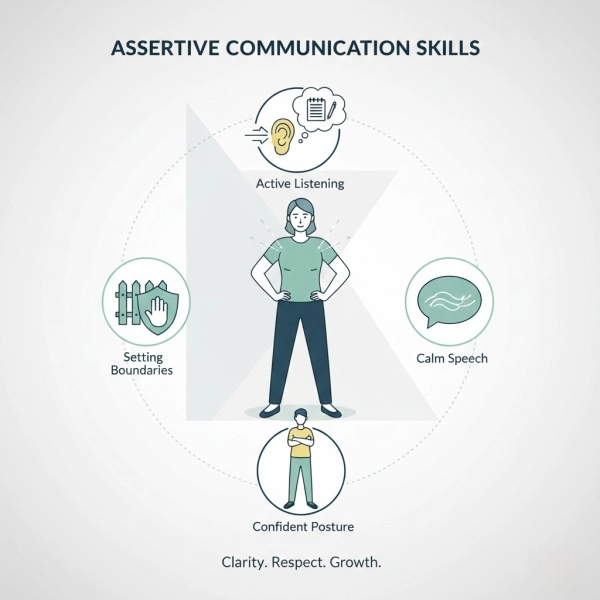
Developing assertive communication skills allows you to express yourself confidently, set boundaries, and navigate conflicts more effectively. These skills also help you avoid slipping into passive or aggressive behaviors.
1. Using “I” Statements
“I” statements communicate your emotions and needs without blaming others. This helps conversations stay constructive rather than confrontational.
Example:
“I feel overwhelmed when tasks are assigned last minute. I’d appreciate more advance notice so I can plan effectively.”
This technique supports constructive feedback and keeps conversations solution-focused.
2. Setting Clear Boundaries
Boundaries protect your emotional well-being and prevent unhealthy patterns. Assertive communicators express their limits calmly and clearly.
Examples of Boundary-Setting Statements:
- “I’m not available at that time.”
- “I can help, but only after I finish my current task.”
- “I’m comfortable discussing this later, not right now.”
Clear boundaries are essential for maintaining professional etiquette.
3. Active Listening
Assertive communication involves both expressing yourself and making sure others feel heard. Active listening builds trust and reduces misunderstandings.
Active Listening Includes:
- Maintaining eye contact
- Asking clarifying questions
- Reflecting back what you heard to confirm understanding
- Avoiding interruptions
- Showing genuine interest.
These signals align with effective nonverbal communication skills.
4. Confident Body Language
Nonverbal behavior plays a major role in how your message is perceived. Confident body language reinforces assertiveness without appearing aggressive.
Assertive Body Language Includes:
- Upright, relaxed posture
- Calm facial expression
- Balanced, natural gestures
- Controlled breathing
- Steady, non-threatening eye contact
5. Managing Emotions
Emotional awareness helps you stay assertive, especially during uncomfortable or tense conversations. The goal is to express your feelings without losing control or attacking others.
Helpful Techniques:
- Pausing before responding
- Using slow, calm speech
- Practicing deep breathing
- Recognizing emotional triggers
- Focusing on solutions instead of blame
Examples of Assertive Communication in Daily Life
At Work:
“Thanks for the feedback. I understand your concerns, and I’d like to share my perspective so we can find the best solution.”
In Relationships:
“I need some quiet time after work before jumping into conversations. It helps me decompress.”
In Customer Service:
“I’d like to request a refund because the product didn’t meet the promised quality.”
These examples show that assertiveness is not loud, rude, or aggressive. It is calm, respectful, confident, and solution-oriented.
How to Become More Assertive
Developing assertiveness takes practice, especially if you’re used to being passive or aggressive. The good news is that anyone can learn to communicate assertively with consistent effort.
Practical Steps to Strengthen Assertive Communication:
- Practice saying “no” politely without lengthy explanations
- Begin with small, low-pressure interactions
- Role-play challenging conversations with a friend or coach
- Keep your tone calm and steady
- Use solution-focused language instead of blame
- Write down what you want to say before difficult discussions
- Remind yourself regularly that your needs and feelings are valid
Over time, assertiveness strengthens confidence, decision-making and how to build strong relationships at work.

Final Thoughts
Assertive communication is a powerful skill that helps you express yourself clearly, maintain healthy boundaries, and build stronger relationships. Understanding the differences between aggressive, passive, and assertive communication, along with developing key assertive communication skills, will transform how you interact with others.
Whether you're seeking personal growth, better teamwork, or healthier relationships, assertiveness is the key to communicating with confidence and respect.





Comments (0)